Saturday, November 6, 2010

This is What Standing Up to the Powers Looks Like

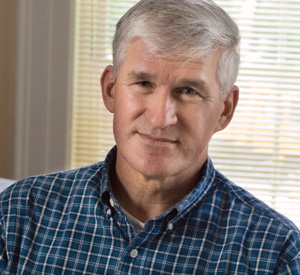
In 2004, I had the chance to meet Elbon Kilpatrick, a minister, former prison chaplain and antiwar activist and someone who had made tremendous personal sacrifices in order to conform his actions to his beliefs.

This week, he had a brief piece on the new Jesus Radicals site talking about his practice of protesting war outside of churches in the American south. I will let Elbon tell the story
I protest in front of small rural churches and large city churches.  The church responses to the protests – no matter the size or denomination – are usually the same:
  • “You couldn’t stand there if Christians didn’t fight to protect your/our freedom of speech.”
  • “God commanded the killing of enemies in the Old Testament and calls us to obey the civil authorities which includes going to war against this country’s enemies.”
  • “We are required to defend ourselves.  Do you think we should allow the Muslims to invade and conquer us?  Would allow someone to break into your home and kill your wife and children?
  • “Jesus taught us to love personal enemies – not national enemies.”
  • Physical responses:  shouting profanities, church members surrounding me so others cannot see the sign, and extending a closed fist with an extended middle finger.
  • Call the police.  This happens at most of the protests.  No arrest is made because the protests are a protected citizen right.  However, a municipality may require the obtaining of a permit prior to the protest so police may maintain order by planning for supervision of the protest.  If this is the case, the police will provide the information on how the permit may be obtained when they respond to the call.

My response to these arguments or actions is the following:

Jesus commanded the love of enemies.  He gave a new commandment to love one another as he loved us (John 15:12).  By giving us this new commandment he made himself the model of love – an unconditional love for not only friends but also enemies.  When Jesus told his followers to take up their crosses and follow him he showed them/us how to bear their/our crosses by bearing his cross.  Jesus prayed mercy and forgiveness for his enemies while they murdered him.  Therefore, Jesus does not teach an ethics of survival by defending ourselves and others against personal or national enemies.

I was deeply moved by Elbon when I met him and I continue to be now. And I am humbled. We all talk about the Gospel, but this is what it looks like to live it.

Some Disturbing Thoughts about Humanitarian Aid

Philip Gourevitch of the New Yorker has raised some disturbing questions both about the outcomes of humanitarian aid and the moral complicity of providers, particularly Christian aid groups,  in horrific crimes by recipients.

Whether or not this has some basis in fact needs to be investigated. Particularly as these groups hold themselves, and are generally held, above reproach. Or as Gourevitch describes it
Aid organizations and their workers are entirely self-policing, which means that when it comes to the political consequences of their actions they are simply not policed. When a mission ends in catastrophe, they write their own evaluations. And if there are investigations of the crimes that follow on their aid, the humanitarians get airbrushed out of the story. Polman’s suggestion that it should not be so is particularly timely just now, as a new U.N. report on atrocities in the Congo between 1993 and 2003 has revived the question of responsibility for the bloody aftermath of the camps. There can be no proper accounting of such a history as long as humanitarians continue to enjoy total impunity.
And surely the Church has a role here as well. Not only do we put our imprimatur on these more often than not faith based groups but we funnel vast resources to them as well. Yet in my experience, we do little to hold them to account. Given what is done in our name, surely it is time to start.

Andrew Bacevich and the Futility of the Afghan War

As I write this, I am watching an interview with Andrew Bacevich on Bill Moyer's Journal. To my mind, Bacevich, a retired colonel and historian has about as much credibility as anyone talking about this today.

In the interview, he said two remarkable things. First, he asserted that General Stanley McChrystal is not fully in charge of the war effort, especially the activities of special forces under his command. The second is that this war is being waged with the full knowledge that its objectives will not be accomplished.

And of course, here in Canada, where the entire debate focuses on our support of the troops fighting the war rather than whether we want to have them killed, wounded and psychologically scarred in a completely pointless military effort.

Friday, September 24, 2010

Words to Live By

From Kung Fu Monkey via Paul Krugman:
There are two novels that can change a bookish fourteen-year old's life: The Lord of the Rings and Atlas Shrugged. One is a childish fantasy that often engenders a lifelong obsession with its unbelievable heroes, leading to an emotionally stunted, socially crippled adulthood, unable to deal with the real world. The other, of course, involves orcs.

Tuesday, June 1, 2010

An Attack on One . . . .

From Andrew Sullivan, this intriguing question: is an attack on a Turkish (NATO member) ship an attack on NATO requiring an allied response? The irony of the brutal Israeli response to this replay of the heroic post-war blockade running by, yes, pre-state Zionists is just incredibly compelling.

Tuesday, May 25, 2010

The Euro Crisis Explained

Via BoingBoing, Australian comedians Clarke and Dawe explain the Euro mess:


Monday, May 24, 2010

Inflation is Not a Threat

Despite all the ideological finger-wagging, inflation, which never was much of a threat, is now not one at all. Further evidence of the rush to government debt (non-European government debt) from today;s Bloomberg:

The 18-month slump in Treasury zero- coupon bonds is giving way to rising demand as the rate of inflation falls to a 40-year low, turning so-called Strips into the best performers in the U.S. government debt market.
Investment banks increased the securities -- created by separating the interest and principal payments of a bond and selling them at a discount -- by 4.4 percent to $179.4 billion from December through April, according to Treasury Department data. It’s the first time that the market expanded for five straight months since 2006.
The call for Strips, which started in 1985 after former Federal Reserve ChairmanPaul Volcker broke the back of inflation, suggests growing bullishness toward the bond market after the Bank of America Merrill Lynch U.S. Treasury Master Index fell 3.7 percent in 2009. Yields on Treasury Inflation- Protected Securities show money managers expect the consumer price index to increase an average 1.96 percent annually over the next decade, down from 2.43 percent as recently as April 29.

It is worth remembering that 2% inflation is a target for most central banks -- it is not a threat.

Sunday, May 23, 2010

There is No Substitute for Fear

The Onion-like Department of Fear has a wonderful story today on the Taliban invasion of Thailand. I should let them tell it
Supposedly on account of civil unrest, many buildings in Bangkok burned to the ground on May 19. It was a scary situation for everyone in Thailand. But for Americans, it was very nearly just another day.
Fortunately, MSNBC made the most of the images. Raw Story, a blog, reports:
People watching MSNBC Wednesday morning could be forgiven for believing that the Taliban had invaded Bangkok. As NBC's Ian Williams reported on violent protests in the capital city of Thailand, a graphic on the lower third of MSNBC's screen read: "New Taliban Attacks, Bangkok Burns."DoF has nothing but praise for the way MSNBC handled this story.
MSNBC drew upon the depth of the news organization's ignorance about Thailand and conceived a terrifying hypothesis: Bangkok is falling to our enemies. The Taliban are on the move. At home, terrified MSNBC viewers would have been asking themselves: Will Honolulu be next? Or will the Taliban head straight for LA?    

There is a lesson here. Whenever there is serious violence overseas, the US media should not hesitate to project whatever scenario evokes Americans' worst fears. Discussion about what actually happened can be left to the following day's newspapers.

This is analysis the Harper crowd can truly believe in.